Human Quest
Moonlit Melodies & Cinematic Marvels: The Marcus Bartley Legacy
Marcus Bartley might not be a household name worldwide, but for the fans of South Indian cinema, he’s nothing short of a legend.
On this page
Marcus Bartley might not be a household name worldwide, but for the fans of South Indian cinema, he’s nothing short of a legend.
The quaint town of Deolali in India would hardly seem like the birthplace of a cinematic genius, but that’s where Marcus Bartley’s story began. Under the watchful eyes of his father, a dentist with military roots, young Marcus first encountered the world of images, albeit of a very different kind: the X-rays. The radiology department, with its alluring process of developing images, was Marcus’s first brush with photography.
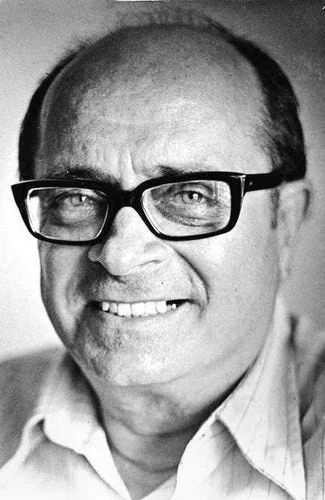
At a tender age, Marcus got his hands on a Brownie camera. The thrill of watching images develop was the start of a lifelong romance. The enchanting landscapes of the countryside and the vibrant village life became his favorite subjects during weekend walks. His talent did not go unnoticed. Newspapers in Madras, especially the evening popular ‘The Mail’, began publishing his captures. The art director there not only recognized Marcus’s flair for photography but also christened his professional name.
However, Marcus wasn’t destined to be confined to the world of stills. Despite his inclination towards photography, the darkroom at The Times of India beckoned him. What began as a stint developing line plates expanded into a role as a photo-journalist, arguably the first in India. Yet, adversity was lurking nearby. A rather suspicious assignment from a dubious German boss led Marcus to a crossroads. Realizing he was potentially involved in espionage, he left Bombay and ventured southward into the world of films.
Marcus’s cinematic journey started under the mentorship of K Subramanyam, followed by a significant stint with AV Meyyappan at Pragathi Studios. But his heart always retained the lessons from his photographic days. Cinematography, for him, was just an extended version of photography. One captured the decisive moment; the other narrated stories in sequences. His earlier tryst with still images, he believed, gave him an edge in the world of moving pictures.
Lighting became an obsession. Marcus was a visionary who believed in simulating natural lighting conditions. His innate understanding of lighting sources, shadows, and reflections made him a master at creating mood with artificial lights. It was as if the boy who was enchanted by X-rays had grown up to mold light according to his will.
However, it was the serene allure of the moonlight that truly set Marcus apart. Childhood memories of trips with his father under the moonlit sky instilled in him a fascination for the pale lunar glow. In the studios, he recreated the magic, becoming the go-to man for moonlight song sequences. Such was his expertise that his name became synonymous with moonlit scenes.
In my view, Marcus’s vast cinematic canvas is filled with masterpieces, but ‘Mayabazaar’ has always stood out as a testament to his unparalleled artistry. Although I won’t delve into a comprehensive dissection of ‘Mayabazaar’, highlighting a couple of its iconic sequences provides a glimpse into the depths of Marcus’s genius. Allow me to guide you through these moments, offering a lens into the brilliance of this legendary cinematographer.
Marcus and Mayabazaar
“Mayabazaar”, released in 1957, stands as one of the most iconic films in the history of Telugu cinema. Much of the film’s allure and timeless charm can be attributed to its groundbreaking use of trick photography by Marcus Bartley, which was still in its infancy in Indian cinema.
KV Reddi, the director, with his visionary ideas, found in Marcus Bartley a companion who could translate his thoughts into picturesque reality. The film is filled with mythological themes and fantastical elements. This posed a challenge, as the film required visuals that were way ahead of the times. Marcus, armed with his legendary Mitchell camera, didn’t just capture scenes; he breathed life into them. His knack for innovation enabled the portrayal of scenes like the magical city of the Ghatotkacha, characters shrinking and expanding in size, or objects flying. All these were executed with impeccable finesse, making viewers believe in the unbelievable.
What stands out is his creation of the moonlight ambiance, a touch so magical that it came to be endearingly called ‘Vijaya’s moonlight.’
**“Lahiri Lahiri Lahiri Lo” from “Mayabazaar” (1957)**is perhaps the most famous of all moonlit songs of black and white cinema. This song is the epitome of Bartley’s brilliance. Set against the backdrop of a moonlit night, the shimmering light and the soft hues envelop the characters, lending an ethereal quality to the sequence. The intricate play of light and shadow, combined with the natural setting, makes it a visual treat.
The brilliance of “Lahiri Lahiri Lahiri Lo” is not just in its melodious tune but in the visual storytelling. While many assume that the song, draped in moonlight, was an outdoor night shoot, Bartley’s craft tells a different story. Only a few frames were shot by the Adyar River in Madras during the blistering noon. Using night-effect filters, Bartley transformed the bright noon into a serene moonlit night, a feat that lasted only minutes. The remaining part of the song was meticulously shot in a studio over a week. But such was his mastery over lighting that there remained a uniform glow, seamlessly merging the outdoor and indoor shots. The set, crafted by art directors Madhavapeddi Gokhale and Kaladhar, was a recreation of the riverbed, accentuating the illusion of a continuous moonlit sequence.
Marcus Bartley’s genius lay in not just using techniques but in blending them to perfection. The back-projection method made it almost impossible for viewers to discern that the song wasn’t shot entirely at the river. This magnificent fusion of real and reel, nature and studio, day and night stands as a testament to Bartley’s unparalleled talent.
Another iconic moment in the movie is the “Vivaha Bhojanambu” song sequence, where food is magically served. While the sequence may seem whimsical, the complexity behind its execution was immense. Bartley used stop-motion techniques combined with live-action shots to create the illusion of self-serving meals.
In a scene where arrows are shot rapidly, Bartley used a combination of real, practical effects blended with post-production techniques. This ensured that the arrows looked both realistic and consistent with the film’s fantastical nature.
In a time when CGI and digital effects were non-existent, Marcus Bartley’s work in “Mayabazaar” was nothing short of revolutionary. He pushed the boundaries of what was considered feasible in cinematography, laying the groundwork for future filmmakers. Even today, his contributions to “Mayabazaar” serve as a masterclass in ingenuity, craft, and the endless possibilities of cinema.
Among the myriad challenges that Marcus faced, the transition from black and white to color film was pivotal. The dynamics of translating colors, understanding the play of shades, and retaining the soul of the scene was an art Marcus mastered. His extensive work in black and white, paradoxically, made him a champion in color.
For Bartley, the essence of cinematography was subtlety. If a shot became the focal point, overshadowing the narrative, it was considered a failure. Cinematography, in his view, was the unsung hero of a film, enhancing the story without demanding attention.
In an era where the magic of cinema was still unfolding, Marcus Bartley emerged as a beacon of innovation and craftsmanship. His work is not just a testament to his unparalleled skill but also to his dedication to the art of storytelling. With every frame, Bartley painted a canvas of emotions, seamlessly blending reality and fantasy. His legacy serves as an inspiration to every film enthusiast, reminding us of the power of creativity, the importance of integrity, and the timeless beauty of cinema. As we revisit the moonlit melodies and enchanting sequences of his films, we are not just entertained but are transported into a world where dreams come to life. In Marcus Bartley, Indian cinema found its luminary, and his light continues to shine bright, guiding generations to come.