Indian Thought
Evolution of Faith - From Rituals to Religion
As human societies evolved, so did their understanding of the world around them. What began assimple rituals to appease the forces of naturegradually transformed into more structured belief systems.
On this page
As human societies evolved, so did their understanding of the world around them. What began assimple rituals to appease the forces of naturegradually transformed into more structured belief systems. These early practices, rooted in the primal fears and needs of our ancestors, laid the groundwork for what we now recognize as religion.
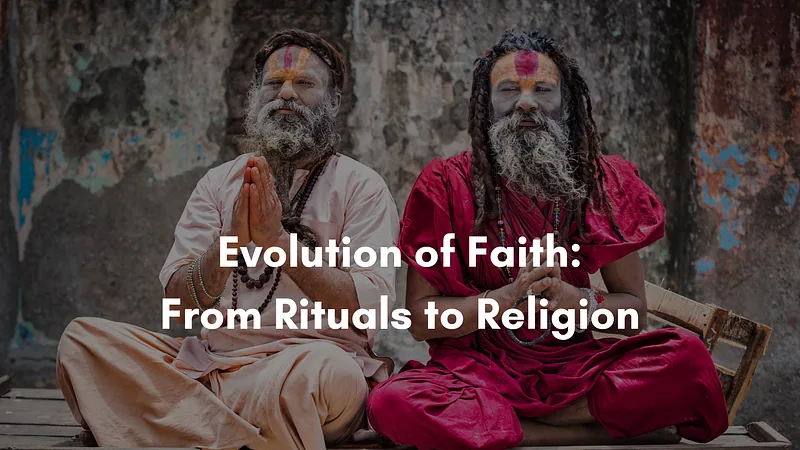
The Birth of Religion
In the beginning, the rituals of ancient humans were deeply connected to their immediate surroundings. They worshipped the sun, rain, thunder, and the forests: elements that directly impacted their survival. These rituals were expressions of both fear and reverence, a way to make sense of a harsh and unpredictable world.
Over time, as communities grew and their understanding of the world expanded, these rituals became more elaborate. They began to develop stories and myths to explain the forces they worshipped. The sun was no longer just a blazing orb in the sky: it became a powerful god who governed life and death. The rain, once simply a source of relief, was now seen as a divine gift, bestowed by a benevolent deity.
The Absorption of Ancient Practices into Religion
As these early belief systems evolved into organized religions, they did not discard the old ways. Instead, they absorbed them, adapting the rituals and symbols of the past to fit new religious frameworks. This absorption process allowed these emerging religions to resonate with the people, making them more relatable and easier to accept.
For example, in pre-Islamic Arabia, the sun, moon, and stars were worshipped as powerful celestial beings. When Islam emerged, it retained the moon as a significant symbol, which we see today in the crescent moon that adorns flags, mosques, and other Islamic iconography. This adaptation helped the new religion resonate with people who were familiar with the moon’s sacred status in their earlier beliefs.
The practice of tawaf, the act of circling the Kaaba, was already a significant ritual before Islam. The Kaaba, located in Mecca, was considered a sacred site long before the advent of Islam, with various tribes worshipping their deities there. When Islam emerged, it retained the practice of going around the Kaaba but reinterpreted its meaning. Tawaf became a central part of the Hajj pilgrimage, symbolizing the unity of Muslims in worship of the one true God. This adaptation helped the new religion resonate with people who were already familiar with the sacredness of the Kaaba and the act of circling it.
Similarly, practices of oracles and divination, common in many ancient societies, were adapted into organized religions. In ancient Greece, oracles like the Oracle of Delphi played a central role in religious life, offering guidance believed to come from the gods. As religions evolved, the concept of prophecy became a significant aspect, especially in Abrahamic religions like Judaism, Christianity, and Islam, where prophets were seen as individuals chosen by God to deliver divine messages. This shift from oracles to prophecy reflects how ancient practices were reinterpreted within new religious frameworks.
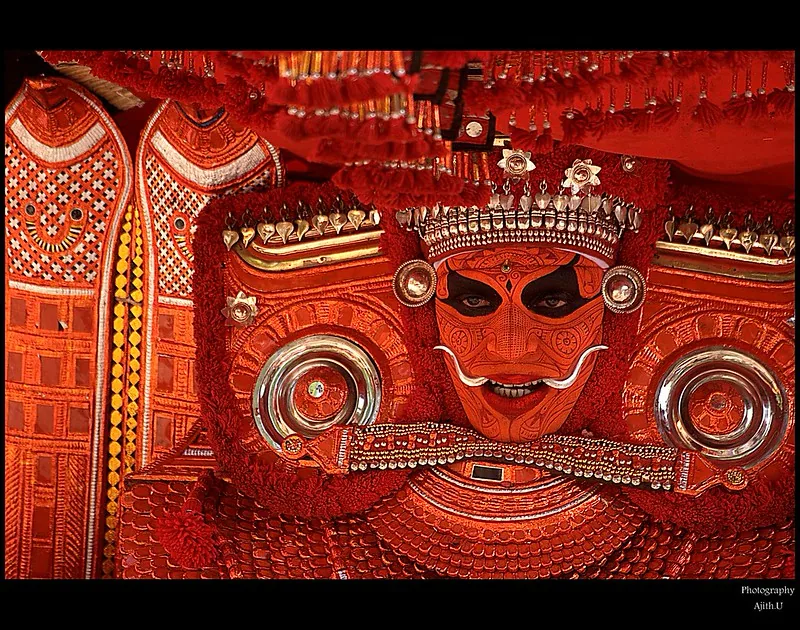
Totemism, where communities identified with specific animals, plants, or natural objects as spiritual ancestors or protectors, also found its way into organized religions. A fascinating example of this is the Bhuta Kola tradition in the Western Karnataka region of India. Bhuta Kola is a ritualistic dance where individuals become possessed by spirits representing the totems of their communities. These spirits are believed to be protectors and are worshipped with deep reverence. While Bhuta Kola remains a distinct tradition, its roots in totemism show how ancient practices continue to coexist with and influence organized religion in the region, particularly within the broader framework of Hinduism.
Ancestor worship, a practice deeply rooted in many ancient cultures, was another significant tradition absorbed into organized religions. In ancient India and China, ancestor worship involved rituals and offerings to honor deceased family members, believing they continued to influence the living world. This practice evolved within Hinduism and Confucianism, where respect for one’s ancestors became central tenets. Similarly, in Christianity, the veneration of saints can be seen as an adaptation of ancestor worship, where saints, often regarded as spiritual ancestors, are revered and called upon for guidance and protection.
Religion as a Living Tradition
These examples highlight an important truth: religion is not a static set of rules handed down from a divine source. Instead, it is a living tradition, constantly evolving and adapting to the needs and understanding of the people who practice it. As societies changed, so too did their religions, incorporating local customs, rituals, and beliefs to stay relevant.
However, in today’s world, we often encounter a different attitude. Many people hold onto religious texts and practices as if they were unchangeable, insisting that they must be followed exactly as they were written, even when those teachings were meant for a society very different from our own.
The Need for Context and Evolution
It’s important to recognize that religious teachings were often shaped by the specific challenges and norms of the times in which they were written. While the core values (like compassion, justice, and respect) may remain timeless, the specific rules and practices may not always be applicable to our modern world.
This doesn’t diminish the value of religion; rather, it emphasizes the need for a more nuanced understanding. Religion, at its best, provides a framework for living a good and meaningful life. It brings people together, offering comfort, guidance, and a sense of community. But to fulfill this role in today’s world, it must be flexible, allowing room for growth and adaptation. By understanding the historical context of religious teachings, we can better appreciate their wisdom while also recognizing the need for change.
That’s my learning for today!