Indian Thought
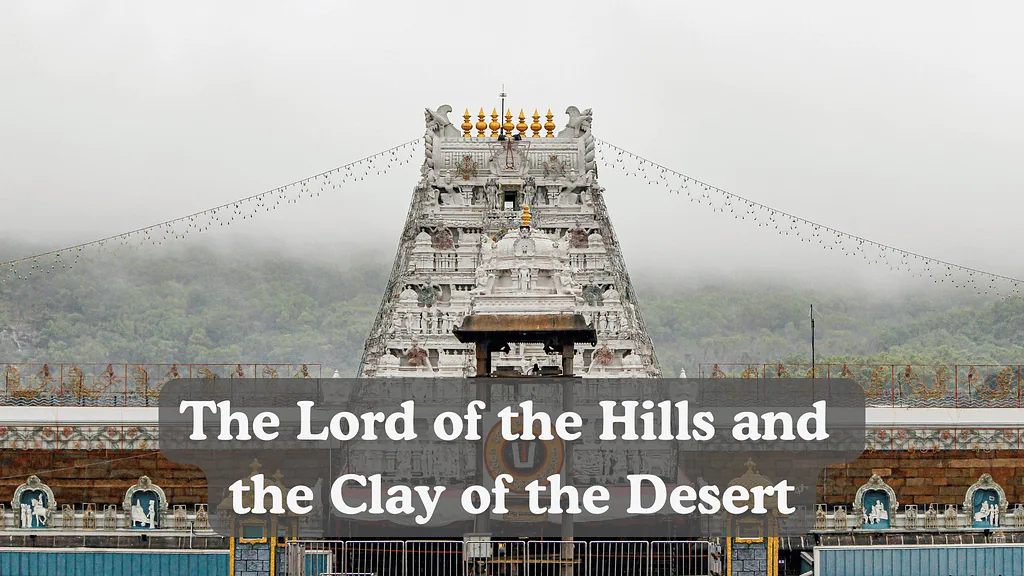
The Lord of the Hills and the Clay of the Desert
A terracotta goddess excavated at Ur around 1800 BCE looks unmistakably like Venkateshwara. Coincidence, or a shared grammar for picturing the divine?
On this page
It happened by accident, as most good discoveries do.
A few years ago, I was walking through the Mesopotamian gallery of the British Museum, half-lost among clay tablets and broken gods, when a small terracotta relief caught my eye.
The label said, “Goddess in a niche, excavated at Ur (Iraq), c. 1800 BCE.” That should have been unremarkable. But something in it tugged at memory.
A tall, front-facing figure. Garlands across the chest. An ornate arch.
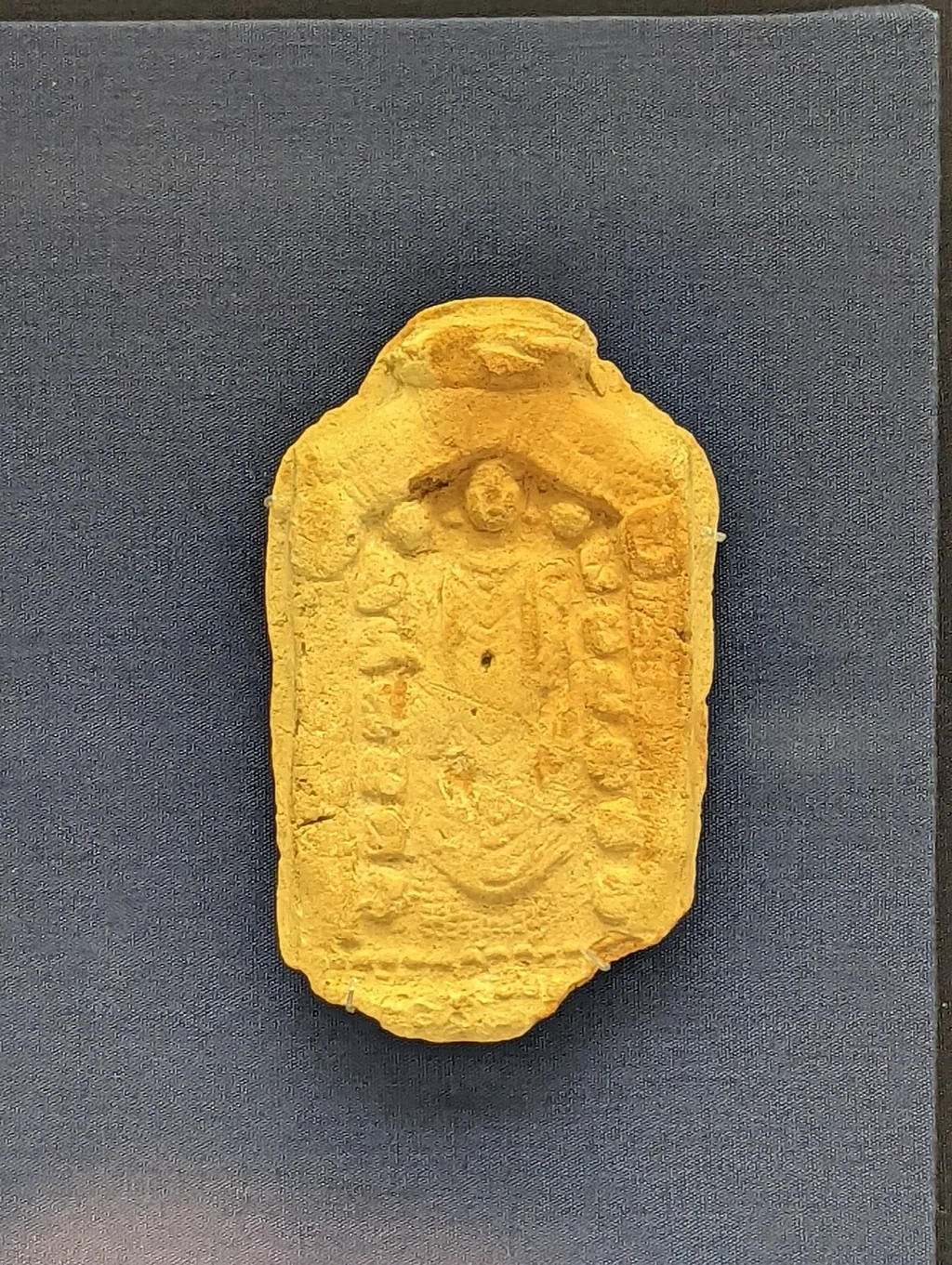
I stood there, startled! Because that wasn’t just an ancient Mesopotamian idol.
It looked unmistakably like Venkateshwara, the Lord of the Seven Hills.
A familiar face in a foreign land
I lingered there far longer than I expected to. How could a god from Mesopotamia look so strikingly similar to one worshipped atop an Indian hill thousands of years later? Was it coincidence, or had something deeper, a shared imagination, survived across time and distance?
That curiosity always stayed with me. Recently, while exploring some archives online, I came across another image, this time a female clay figure, from Babylonia, around the same time as earlier image. The same niche. The same ornamental frame.
And this time, the resemblance was even stranger, she looked unmistakably like Padmavathi, Venkateshwara’s consort.
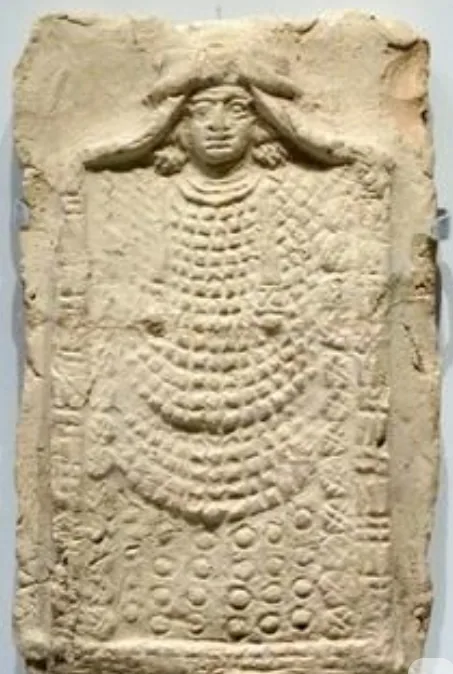
Two figures, male and female, from the same region, both echoing the divine pair worshipped today on Tirumala’s hills.
Too close for coincidence. Too distant for proof. Exactly the kind of mystery that invites wonder.
The lord of the hills, before Vishnu arrived
Back home, I began to dig. The name Vengadam, now called Tirumala, appears in Tamil Sangam poetry centuries before the Common Era. The poems speak of “the red-eyed god who stands upon the waterfalls of Vengadam”
But this wasn’t yet Vishnu of the Sanskrit epics. He was Mayon, the dark one of the forests, radiant-eyed, loved by hunters and herdsmen.
Long before organized temples and philosophy, divinity in South India was ecological, a living part of the land. Hills, trees, rivers, each had its spirit. And each tribe had its protector god, who was often no different from their own chief or ancestor.
Scholars have traced names like Perumal and Tirumal to ancient hill tribes, possibly the Mallas .. “people of the mountains”.
The word Perumal likely began as a title: “the great one” or “chief of the hills”. Over centuries, that title became sacred. The chief became a legend. Legend became a god.
Mesopotamia’s own transitions
Many centuries before Tamilakam’s mention, similar transformations were unfolding in Mesopotamia. City-states were rising from older tribal settlements. Chiefs and clan heads, once mortal protectors, were deified after death. Temples were built not for abstractions, but for remembered rulers who had become divine guardians of their people.
Similar to the clay plaque unearthed from Ur, which caught my eye, often depict these newly divine figures: human yet exalted, framed in niches, standing eternally watchful.
The parallels to the tribal chief -> deity transformation in southern India are uncanny. Both worlds, separated by deserts and oceans, seemed to be solving the same question:
How to preserve the presence of those who once led us through the wild.
Parallel myths, not borrowed ones
There’s no evidence that ideas or cults traveled from Mesopotamia to the southern hills of India. But they didn’t have to. Human imagination, given the same conditions, forests, hills, tribes, and memory, often reaches for the same answers.
Both Mesopotamia and South India lived through ages when societies were shifting from tribal to settled, from oral to ritual.
In both, leaders became gods, and gods became the anchors of civilization.
So perhaps the resemblance between those clay figures and the deities of Tirumala isn’t a coincidence at all, but a reflection of how humans everywhere carve divinity out of memory.
When the Vaishnava tradition reached Tirumala in later centuries, it didn’t erase the old hill spirit.
It absorbed him. The dark Mayon became Vishnu, but the hill remained the same. That is perhaps why the Tirumala temple still feels different from other Vishnu shrines: beneath the Sanskrit verses and rituals, there lingers the echo of an older, earthy sanctity, the god of a hill, the guardian of a people.
The two figures, the male from Ur and the female from the same region, might have nothing to do with India. Or they might be faint echoes of a forgotten cultural stream that once connected the mountain worlds of the east and the west. We may never know.
The divine doesn’t belong to one civilization. It travels, in myths, and in memory!
That’s my learning for today!