Ancient → Modern
Witness to Glory: Domingo Paes and the Vijayanagara Empire
Hampi, known for its monumental ruins and historical charm, has always been near and dear to my heart. My multiple visits to this ancient city have always filled me with awe and curiosity.
On this page
Hampi, known for its monumental ruins and historical charm, has always been near and dear to my heart. My multiple visits to this ancient city have always filled me with awe and curiosity. On one particular trip to the Mahanavami Dibba, a towering structure, an intriguing carving caught my eye. It depicted a king, likely Sri Krishna Deva Raya, in the company of two foreign travelers. It got me thinking about what their experience must have been like, exploring this splendid city.
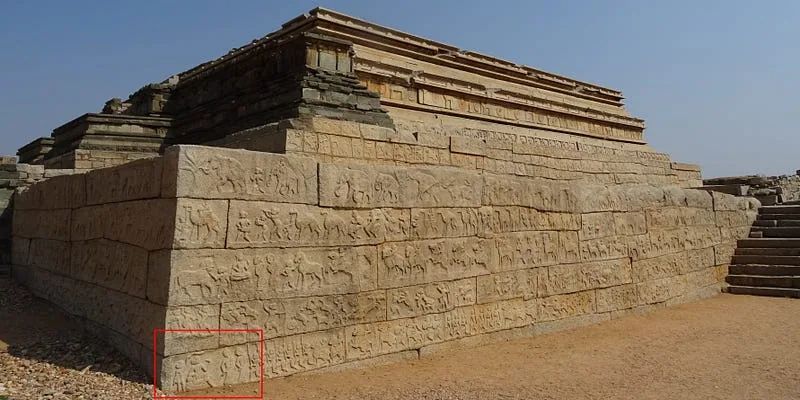
My father’s captivating stories nurtured my childhood understanding of Hampi, but it wasn’t until recently that I dove into the history myself. Recently, I stumbled upon an English translation of a book called “A Forgotten Empire (Vijayanagar): A Contribution to the History of India.”by Robert Sewell. Fascinatingly, this book described the experiences of two Portuguese travelers, one of whom might have been the person in the carving I saw.
Reading this book felt like unearthing hidden treasure. It gave me a fresh view of Vijayanagara, seen not from within but from an outsider’s perspective. One of the travelers, Domingo Paes, described the affluence and architectural brilliance of the empire in captivating detail.
Through Paes’ words, I found myself wandering the vibrant streets of Vijayanagara, marveling at grand temples, and soaking in the city’s lively atmosphere. It was as though I was seeing the city through his eyes, just as he had centuries ago. These accounts were too fascinating to keep to myself, so I decided to share the highlights of Paes’ chronicles in this post. Together, we’ll explore the illustrious Vijayanagara Empire, understanding its social life, and gain insights into its intriguing king, Sri Krishna Deva Raya.
Domingo Paes Travels to Vijayanagara Empire:
In the early 16th century, a Portuguese traveler named Domingo Paes embarked on a remarkable journey from the coastal city of Cochin to the heart of the glorious Vijayanagara Empire. Little did he know, his detailed accounts would become an invaluable historical resource, shedding light on one of medieval India’s most potent empires.
Paes began his journey at Cochin, a bustling port city thriving with maritime trade, where the Portuguese had established a significant presence. Sailing along the lush green western coast of India, he traversed the rocky Deccan Plateau to finally behold the grandeur of Vijayanagara.
As he approached, his eyes were greeted with a vast city, spread out and spectacular. Writing about Vijayanagara, he was overwhelmed by its size, noting, “This city is the best-provided city in the world, and is stocked with provisions such as rice, wheat, grains, Indian-corn, and a certain amount of barley and beans, moong, pulses, horse-gram, and many other seeds which grow in this country which are the food of the people.” Such was the city’s expanse and its populous vibrancy, Paes marveled, “This is a city which has a circuit of sixty miles; its people are countless as in the city of Rome, and so are the number of its houses.”
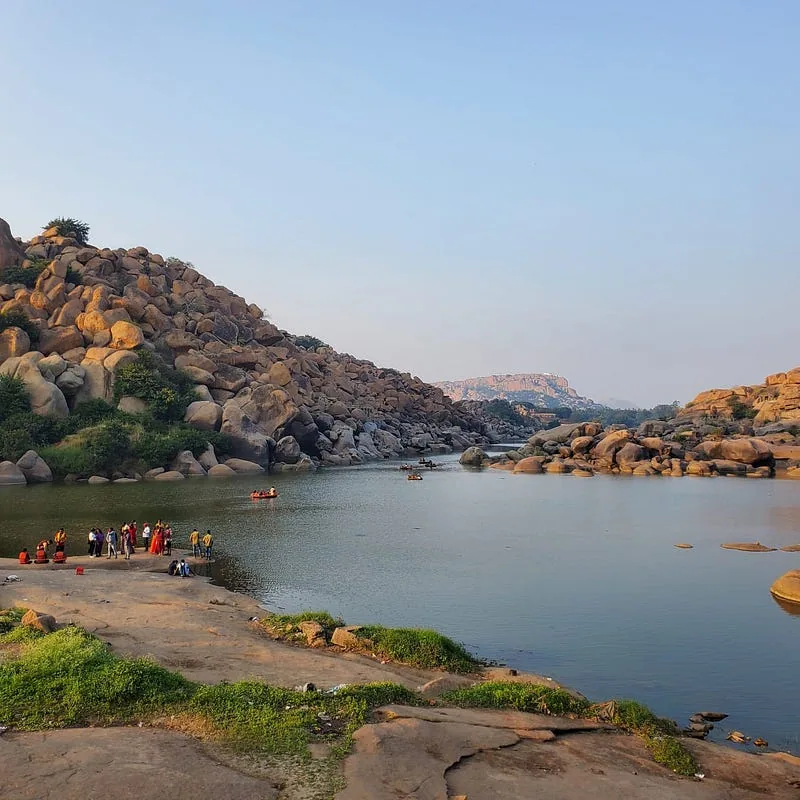
Paes was immediately struck by the city’s layout, which he equated to the grandeur of Rome. “The city is as large as Rome and very beautiful to the sight,” he wrote, indicating his sheer admiration for its architectural splendor and vastness.
The fortifications of Vijayanagara were an engineering marvel that impressed Paes. He detailed, “The king has made a triple moat, and each one is forty steps across… On the inner side, that is towards the inhabited city, there are many places underground where men stay as sentries, and from within they can prevent the approach of an enemy to the wall, for these moats cannot be crossed without making a noise.” The city’s fortifications stood as a testament to the empire’s military prowess and its ability to defend itself against potential invasions.
One of the features that intrigued Paes the most was Vijayanagara’s sophisticated water management system. He found the region to be rich with lakes, reservoirs, and other water bodies constructed by the king. However, he also recounted the struggles of maintaining such a complex system. He noted, “The king made a tank… at the lower end of the ‘nars’ (hills) where he made a dam… But at the end of five years, the water had worn away underneath, and washing the foot of it, made a large breach, and all the water escaped at once.” This reflection provides a deep insight into the ongoing challenges faced by the empire in managing its water resources.
On Sri Krishna Deva Raya:
Domingo Paes vividly describes the daily routine of Sri Krishna Deva Raya, painting a portrait of a king who was not only a just ruler, but also a disciplined man of routine and embodiment of power and wisdom. He noted, “This king is of medium height and of fair complexion and good figure, rather fat than thin; he has on his face signs of smallpox. He is the most feared and perfect king that could possibly be, cheerful of disposition and very merry; he is one who seeks to honor foreigners, and receives them kindly, asking about all their affairs whatever their condition may be.”
This description illustrates the king’s physical presence and his pleasant demeanor. Paes’ observation of the king’s keen interest in foreigners suggests an open-minded and curious ruler who was eager to learn and adopt the best from everywhere.
Paes also outlined the king’s daily routine which was marked by discipline. He wrote, “He is a great ruler and a man of much justice, but subject to sudden fits of rage, and this is his failing. He shows great favor to the Moors, and there are some in his kingdom, though few. He rises betimes, and goes to hear news of his kingdom and orders it as he pleases; he dines at midday, sleeps a little, and then comes out to hear causes and orders justice to be done.”
The king’s commitment to justice is highlighted in Paes’ observations. His account shows the king as a man of action and a diligent administrator, unafraid to shoulder the responsibilities of his position.
On Trade:
Diving deeper into his journey, Paes was mesmerized by the pulse of the city, its markets and trade. The flourishing trade of Vijayanagara Empire was as vibrant and diverse as its people, contributing to its position as a hub of economic and cultural exchange in the southern part of India.
The markets were a riot of colors, aromas, and sounds, brimming with a variety of commodities. “There you will find everything abundant; rice, wheat, grains, Indian corn, and a certain amount of barley and beans, moong, pulses, horse-gram, and many other seeds which grow in this country which are the food of the people,” wrote Paes. This observation provided a glimpse of the agricultural wealth and food variety that the empire enjoyed, showcasing the empire’s fertile lands and advanced agricultural practices.
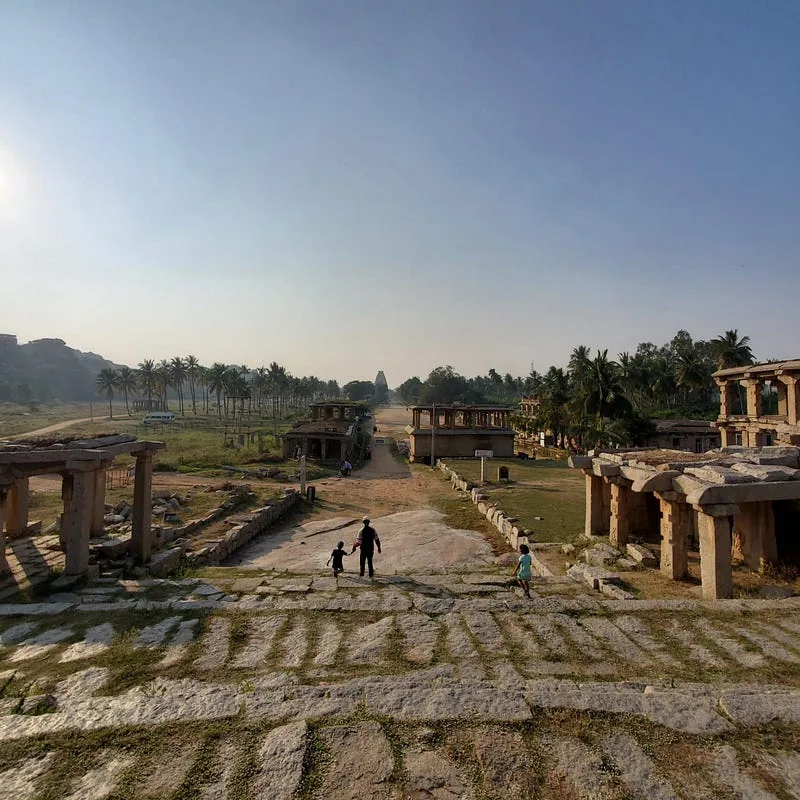
Paes noted the presence of precious stones and gems in the markets, indicating the wealth amassed through mining and trade. He wrote, “The quantity of merchandise which is sold in these bazaars is very great, as I will describe to you: every day more than a thousand loads of pan-supari which, as I said, is a fruit which the natives are in the habit of eating at all hours.” This observation clearly points towards a booming economy fueled by trade and commerce, with an extensive demand for local and imported goods.
The bustling marketplaces were not just the city’s economic centers but also its cultural heartbeat. As Paes wrote, “The streets and the markets are full of laden oxen without count, so that you can hardly pass, so many are there which come from the interior laden with provisions to the city.” This quote paints a vivid image of a city pulsating with life, where marketplaces were places of interaction, exchange, and celebration.
Furthermore, he noted the presence of a stringent and systematic tax collection system, indicating a well-structured administration overseeing the economic activities. He mentioned, “And all merchandise which enters has to pay duty, that there is no fraud, and that duty is collected.”
On Women:
According to Paes, women of Vijayanagara enjoyed a significant level of autonomy and respect. He was taken aback by women’s freedom and rights in the society, compared to his homeland. He noticed that the women were not confined within the four walls of their homes but actively participated in the economic and social life of the city. They were seen in the markets, not just as shoppers, but also as traders and business owners.
In his chronicles, Paes mentioned the rich attire and jewelry adorned by the women of Vijayanagara, which indicated their wealth.
Paes also described the customs and traditions associated with women in the empire. He wrote about the prevalence of the tradition of Sati among certain sections of society, suggesting the deeply ingrained customs that were part of the societal fabric.
Paes was particularly struck by the respect shown to women in Vijayanagara society. He wrote: “The people are very obedient to their king, and they pay him great reverence and respect; and they do the same to the pagans, who are their priests, and to the idols, and also to their women.”
On Bhuvana Vijayam and Mahanavami Dibba:
The Bhuvana Vijayam or ‘The Hall of Victory’, a part of the royal complex, was a significant place where the king would hold court, entertain guests, and witness dance and music performances. Domingo Paes was awestruck by the grandeur and opulence of this hall. He wrote: “There are many beautiful apartments, and in the audience chamber of the king, a hall, where he gives audience, which is a building of much grandeur and size.”
Further, Paes made note of the astonishing artwork that embellished the hall, and the presence of an elevated seat for the king from where he could preside over proceedings, a visual symbol of his supreme authority.
Just as the Bhuvana Vijayam showcased the political authority of the king, the Mahanavami Dibba or ‘The Great Platform’ represented both religious significance and royal power. This massive square platform, which still stands in the royal enclosure of Hampi today, was the central stage for the celebration of the grand festival of Mahanavami.
Paes wrote about the festivities with awe: “On these three days he has a great platform outside the palace, the height of a man, spread with splendid carpets, and there he takes his seat surrounded by all his captains and chief men of the kingdom.”
He also detailed the opulence of the festival, which involved a grand procession of elephants, horses, and soldiers. Paes noted the king’s liberal display of wealth during the festival, as he gave away enormous gifts of gold, horses, and elephants.
On Temples:
Perhaps the most striking of all architectural wonders Paes encountered was the Vitthala Temple. He was left spellbound by the temple’s complex and detailed craftsmanship. Describing the temple, he wrote, “The lower part of it up to the roof and the first story are of finely sculptured stone; the remainder is all of clay and covered with copper, whereon they have made designs with gilded knobs well worth seeing.”
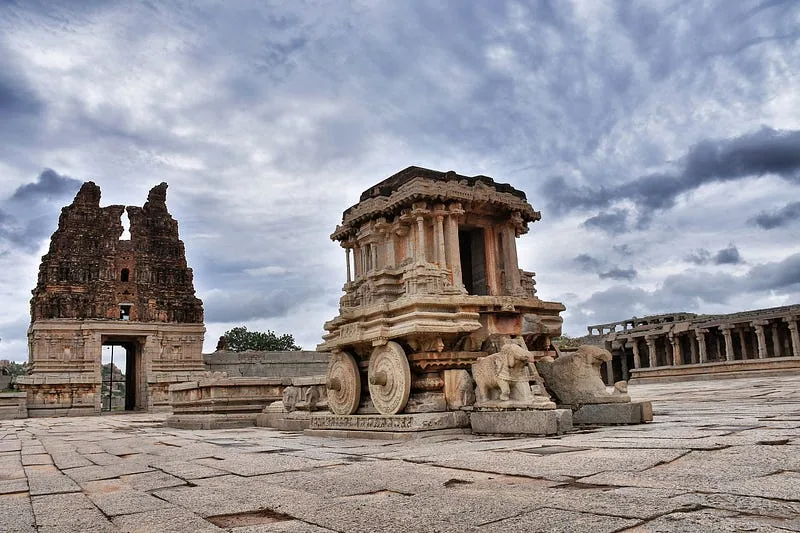
The Vitthala Temple was just one of many architectural marvels that captivated Paes. The city was home to numerous temples, each reflecting the rich cultural and religious fabric of the Vijayanagara Empire. He was especially fascinated by the enormous gopuras that towered over the city skyline. These gopuras, according to Paes, were covered with copper plates gilded with gold, a testament to the immense wealth of the empire.
Notably, he was amazed by the scale of the city’s temples and the deep devotion of the people. He wrote, “In this city you will find many temples, but mostly of idols. In the first place, when you go out of the royal gate there is a pagoda to the right hand, where they have their idol which they hold in great reverence; and people are continually going in to see it, making their offerings.”
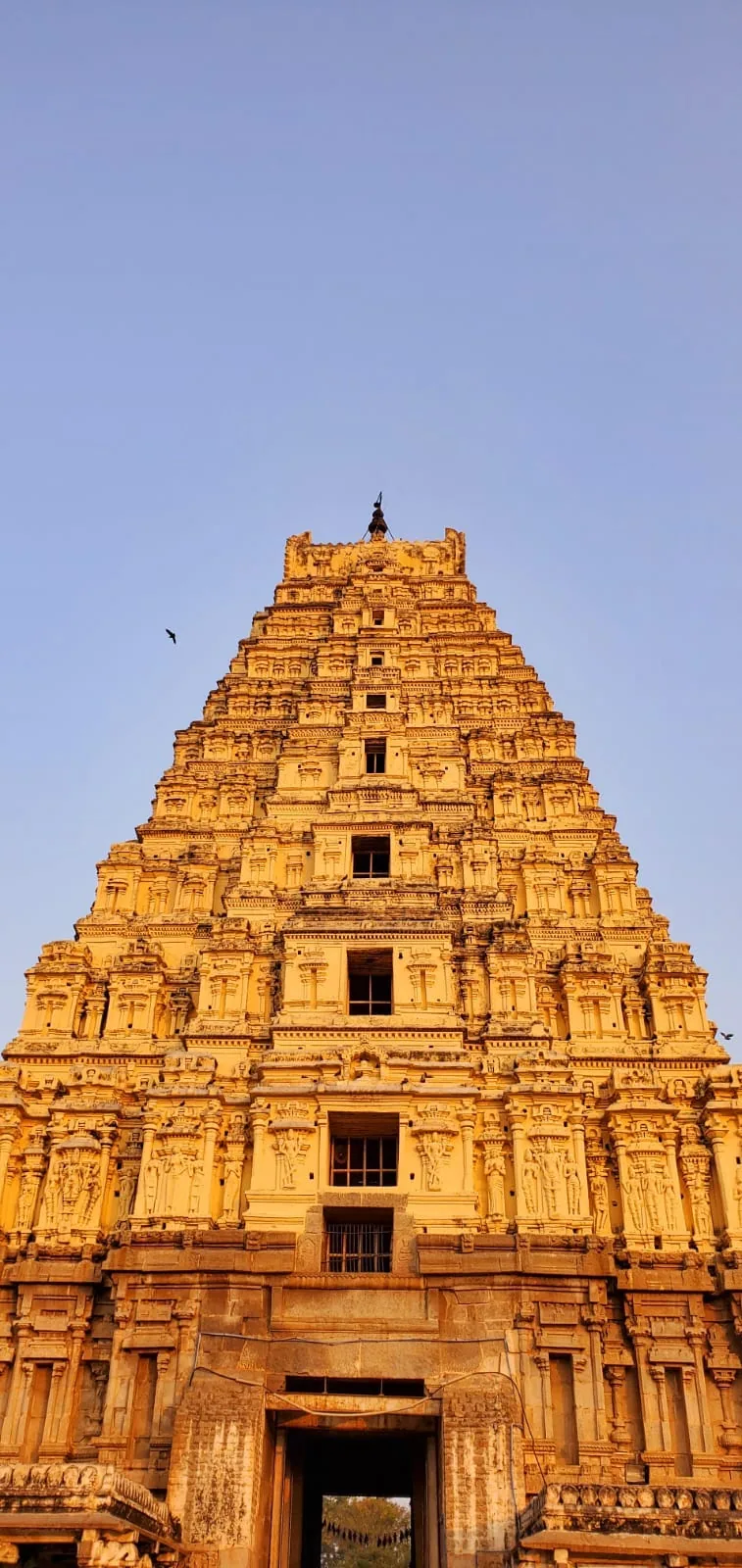
Paes was also impressed by the grand royal residences and the public halls, known as ‘mantapas’. He noted the use of stone in the construction of these buildings and the presence of meticulously carved pillars. The attention to detail in every aspect of construction fascinated him. The combination of intricate design and grand scale gave the architecture of Vijayanagara a unique character that reflected the empire’s artistic prowess and technological sophistication.
Paes’ observations serve as a window into the past, allowing us to glimpse the magnificence of a once-thriving empire, its wealth, prosperity, and vibrant socio-cultural fabric. Through his words, we can almost hear the music and festivities of the Bhuvana Vijayam and visualize the grandeur of the Mahanavami Dibba, as they once stood in their full glory. These narratives enrich our understanding of one of South India’s most significant historical periods, bringing us closer to the everyday life and societal structures of that time.
That’s my learning for today.