Ancient → Modern
Quantum Physics Meets Ancient Wisdom
There’s a particular beauty in exploring connections between seemingly distant fields. One such intriguing overlap exists between the principles of quantum physics and the profound insights of ancient Indian philosophy.
On this page
There’s a particular beauty in exploring connections between seemingly distant fields. One such intriguing overlap exists between the principles of quantum physics and the profound insights of ancient Indian philosophy.
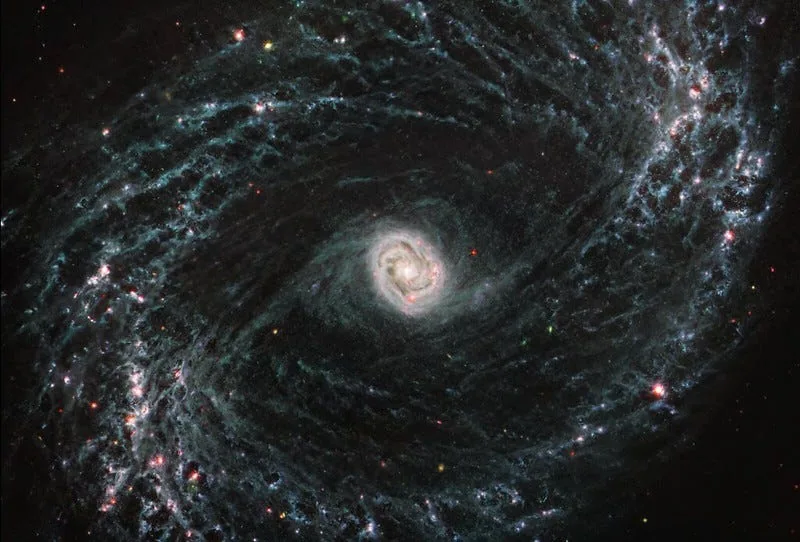
Quantum Superposition: More Than Meets the Eye
Quantum superposition might sound like a term from a sci-fi movie, but it’s actually a foundational concept in quantum mechanics. In simple terms, it means that tiny particles, like electrons, exist in all possible states at once until someone looks at them (or observes them). Remember Schrödinger’s cat? That thought experiment where a cat is both alive and dead until you open the box? Yeah, that’s superposition in action.
Imagine you have a standard deck of playing cards, and you shuffle it thoroughly. You then take the top card without looking and hold it face-down. At this moment, you have no idea whether that card is a heart, diamond, club, or spade, or whether it’s an ace, number, or face card. In a way, you can think of that card as being in a superposition of all possible states.
Now, the card isn’t literally every card at once, but from your perspective of not knowing, it could be any card. It’s only when you flip the card over and observe it that it “chooses” a state, revealing its specific suit and number. Before this, all possibilities were open.
Similarly, in quantum mechanics, particles are thought to exist in multiple potential states at once until they’re observed. The act of observation, much like turning over the card, collapses these potentials into a single, defined state.
Brahman: The Infinite Canvas
In the heart of Indian philosophical thought lies the concept of “Brahman.” Originating from the Sanskrit root “brh,” which means “to grow,” Brahman represents the ultimate reality or the absolute, surpassing all that exists, beyond comprehension, and yet being the very essence of every entity.
Brahman defies conventional definitions because it transcends them. While deities, beings, and the material world have qualities, Brahman is often described as “Nirguna,” meaning without attributes. It isn’t limited by time, space, or form. It’s neither male nor female, neither tangible nor intangible. Yet, paradoxically, everything in existence emanates from and returns to Brahman.
To make sense of this, picture a vast, endless canvas. This canvas, Brahman, doesn’t change or waver. Now, imagine the universe and everything within it as intricate paintings and patterns on this canvas. While the designs (our perceivable universe) evolve and transform, the canvas (Brahman) remains ever-constant, serving as the backdrop to all existence.
A Tale of Two Realities
So, how do these two seemingly unrelated concepts connect?
- The World of Possibilities: Both quantum superposition and Brahman hint at a world brimming with possibilities. Just as a particle holds endless potential outcomes before being observed, Brahman is the limitless potential from which everything in our universe arises.
- Seeing Beyond: Just as particles defy our everyday logic when they’re in superposition, Brahman challenges our usual understanding of the world. Both invite us to think outside the box, pushing the boundaries of what we know.
- Reality Check: Here’s the kicker. Just as the world we see after observing a quantum particle is only one of its many potential realities, the world we live in, according to Advaita Vedanta, is just a part of a more profound reality, with Brahman being the ultimate truth.
In exploring these concepts, a captivating insight emerges: the quests of science and philosophy, though distinct, seem to overlap and intertwine at profound junctures. The principles of quantum superposition and the timeless nature of Brahman may arise from different epistemologies, yet they both beckon us to look beyond the surface, to question, and to embrace the boundless mysteries of existence. While we shouldn’t jump to say one explains the other, this connection offers some cool food for thought.
As an old Sanskrit saying goes, “एकं सत् विप्रा बहुधा वदन्ति” (Ekam Sat Vipra Bahudha Vadanti), which translates to “Truth is one; the wise call it by various names.” Whether through the lens of science or philosophy, our endeavors converge towards understanding that singular truth, hinting that perhaps, these fields are closer in spirit than they appear on the surface.
That’s my musing for today!