Ancient → Modern
Legends and Language: The Tamil-Korean Connection
Language isn’t just a medium of communication; it’s a repository of culture, history, and shared experiences.
Language isn’t just a medium of communication; it’s a repository of culture, history, and shared experiences. Throughout history, we find languages that have striking similarities despite geographic and cultural distances, challenging our traditional understanding of linguistic evolution. The connection between Dravidian languages, especially Tamil, and Korean is one such enigma.
These similarities were first documented by missionaries and explorers who, during their travels, encountered words, phonetics, and syntactical structures in Korean that closely resembled those in Tamil. Additionally, the phonetic quality and rhythm of both languages, especially in their traditional forms, share uncanny resemblances. For example:
Tamil “Appā” (Father) & Korean “Appa” (Father).
Tamil “Ammā” (Mother) & Korean “Eomma” (Mother).
Tamil “Kāṇ” (Eye) & Korean “Nun” (Eye).
Tamil “Nāl” (Day) & Korean “Nal” (Day).
Such parallels inevitably led to questions: Is it mere coincidence, or is there a deeper historical connection between these two linguistic groups?
The fables and stories of cultures often shed light on their ancient connections, interactions, and shared histories. The story of the Tamil princess Heo Hwang-ok is one such legend that bridges the narratives of the Tamil and Korean civilizations.
Tales from Ancient Chronicles
According to Korean chronicles, particularly the “Samguk Yusa” (Memorabilia of the Three Kingdoms), In 33 A.D., in India, a story began. Princess Seembavalam was born with legends surrounding her. She would grow up to bridge two cultures: India and Korea.
In Korea today, people still remember her stories. At first, some thought she came from Thailand. But clues and old stories hinted she was from Ayodhya, and maybe even from the south of India. How? Well, her boat had a flag with two fish symbols, like those from an old Indian dynasty called Pandyas. Plus, many Korean words sound surprisingly like Tamil words from South India.
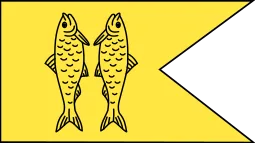
Following a dream her parents had, young Seembavalam, at just 16, set sail for Gaya in Korea. The mission? To marry King Kim Su-ro. She wasn’t alone on this journey; 22 friends joined her for the two-month trip.
In Korea, King Su-ro was waiting. He’d turned down many potential queens, believing that his true match would come from afar. When he met Seembavalam, he was sure: she was the one. She took on a new name, Hwang-ok, and together they built a strong dynasty.
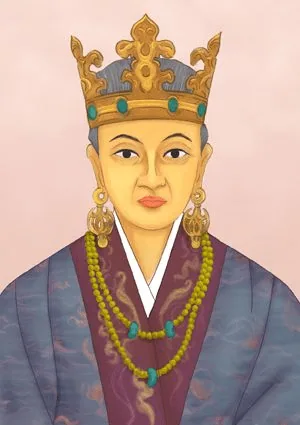
Their legacy? Twelve kids, two of whom carried her last name. Their eldest son took over the throne after them. Queen Heo wasn’t just influential during her time; she left a lasting impact. Her final resting place in Gimhae stands as a testament to her importance.
While this story is rich in romantic allure, it’s also symbolic of the ancient ties that might have existed between these two regions. But is it solely a legend? The Gimhae Kim clan’s lineage, traditions, and rituals provide some indirect evidence that might point towards a historical kernel of truth in this tale.
Trade Connections
In addition to mythical tales, the tangible threads of trade also suggest a connection. Ancient civilizations weren’t as isolated as one might assume. The maritime Silk Road, which connected various parts of Asia, might have facilitated trade between the Tamil merchants and their Korean counterparts. Artifacts, inscriptions, and ancient port records indicate the presence of Tamil influence in many parts of Southeast Asia, so it’s plausible that they reached the Korean peninsula as well.
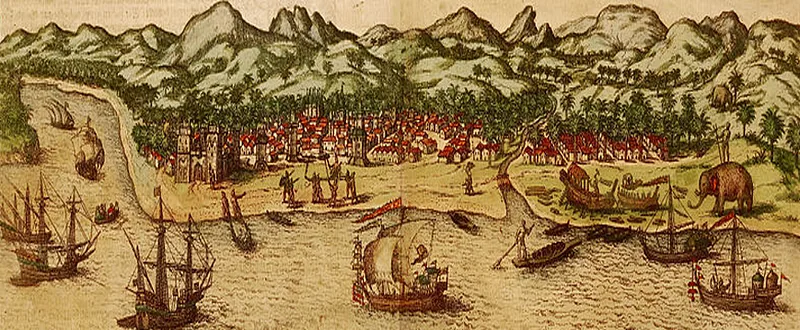
When cultures trade, they don’t just exchange goods; they exchange ideas, customs, and even linguistic elements. Thus, it’s possible that the linguistic similarities arose from such interactions and exchanges.
Evolution of Languages Over Time
The dynamics of linguistic evolution are as intricate as those of biological evolution. Over millennia, languages morph, adapt, assimilate, and sometimes, even become extinct. Understanding the evolutionary trajectory of a language can shed light on its historical roots, influences, and interactions with other languages.
If we consider the hypothetical common ancestor of Dravido-Korean languages, a “proto-language”, we can envisage a scenario wherein an ancient community spoke this language. Over time, as communities migrated, settled in new regions, and encountered other cultures, this language might have diverged into two or more distinct languages.
This linguistic divergence is not uncommon. Take, for example, the Proto-Indo-European language, from which sprouted diverse languages like English, Hindi, Greek, and Russian. Similarly, the Dravido-Korean hypothesis suggests that both linguistic groups evolved from a common ancestral language.
There are challenges to this theory, however. While the structural similarities between Korean and Tamil can suggest an evolutionary connection, the vast geographical and temporal distances pose significant questions. Would it be possible for two languages to retain structural similarities over such long durations and distances? Or are these similarities a result of convergence, where unrelated languages develop similar features independently?
Moreover, if there was indeed a proto-Dravido-Korean language, what led to its bifurcation? Was it migration, trade, or just parallel evolution? The absence of intermediary linguistic evidence in regions between South India and Korea makes this puzzle even more intriguing.
This intricate web of possibilities is what makes linguistic evolution so captivating. The search for direct evidence, like inscriptions or ancient texts, continues. But until then, theories, hypotheses, and passionate debates enrich our understanding of the past.
That’s my learning for today!