Ancient → Modern
Hyderabad: The Forgotten Epochs and the Quest for Origins, Part 1
Greetings from the heart of Hyderabad, a city where history whispers through the stones, food, and soil.
On this page
- The Enigmatic Deccan Traps
- The African Exodus
- Why Deccan?
- Cultural and Genetic Impact
- Prehistoric Records in and around Hyderabad
- Echoes in Ochre: Kasipeta’s Mesolithic Gallery
- A Shelter Under the Tortoise Rock: Neolithic Axes in BNR Hills
- Seasons in Stone: The Habitation of Lanco Hills
- A Symphony in Stone: Musapet’s Neolithic Bull
- Coins Tell a Tale
- Keesaragutta: Where Myths and Reality Converge
- Conclusion
Greetings from the heart of Hyderabad, a city where history whispers through the stones, food, and soil. It is widely accepted that the city was founded by Quli Qutub Shah in 1591, but does that mean this land lay barren, devoid of human activity, before this time? Recently, I came across a video that delved into the richness of the ancient history of this area we now call Hyderabad. The whispers of Hyderabad’s past reach far beyond the confines of recorded history, recounting tales that span across millions of years. I’ve always explored universal wisdom and ancient cultures in my blog posts, and while this one might seem a divergence, it really isn’t; it’s about my own backyard, a city with imprints from eons past.
In this journey, we’ll traverse the boundaries of time and space, from geological marvels like the Deccan Traps to the first stirrings of human civilization on this ancient land. I’ve collated an array of information, blending the factual and the mythical, to present to you a version of my city as you’ve never seen before. Though this venture slightly deviates from the usual content of my blog, it brings me immense pleasure to explore the depths of my own roots. So come along, let’s unearth the unwritten chapters of Hyderabad.
The Enigmatic Deccan Traps
Perhaps one of the most fascinating geological features of the Deccan region (on which Hyderabad is located) is the Deccan Traps, a series of volcanic flood basalts that cover a substantial portion of the western Indian plateau. These volcanic formations are not merely static landmarks; they are dynamic elements deeply intertwined with the Earth’s geological and biological history.
Around 66 million years ago, Earth faced one of the most cataclysmic extinction events in its history, wiping out nearly 75% of all species, most famously the dinosaurs. While the impact of a massive asteroid is often highlighted as the primary cause, *the volcanic activities associated with the Deccan Traps have also been implicated in this biological reset.*The immense amount of lava that poured out not only transformed the landscape but also released enormous quantities of sulphur and carbon dioxide into the atmosphere, altering the Earth’s climate.
It’s ironic that the same volcanic activity potentially linked to such devastation also laid the foundation for a fertile and resource-rich environment. The Deccan Traps brought mineral-rich soil to the surface, creating an attractive destination for the early settlers who would eventually find their way from Africa.
The African Exodus
The story of humanity is essentially a story of movement, a ceaseless quest for new horizons. The first chapter in this migratory tale unfolds in Africa, the cradle of humankind. Imagine a group of Homo sapiens taking their first tentative steps out of the African continent around 70,000 years ago. Fueled by a combination of curiosity, necessity, and perhaps fate, these early humans set out on an epic journey that would ultimately populate the entire globe.
While some headed towards Europe and others made their way to the Far East, a significant contingent chose the path leading to the Indian subcontinent. It’s believed that they traversed along the coastlines of the Arabian Peninsula before reaching what we now know as Gujarat and subsequently, the fertile lands of the Deccan. This initial wave of migration likely followed the coastline, utilizing marine resources and perhaps even inventing rudimentary watercraft. The presence of microlithic tools and fossils in the western Deccan plateau provides circumstantial evidence supporting this hypothesis.
Why Deccan?
One might wonder why these migrants chose the Deccan region to settle. The answer could lie in the unique ecology and geography of the Deccan Plateau. Rich in mineral resources and gifted with fertile lands, the plateau offered a perfect staging ground for a burgeoning civilization. Moreover, the Deccan Traps’ volcanic soil was incredibly fertile, an unintended yet beneficial consequence of the ancient cataclysm that once nearly wiped out life on Earth.
Cultural and Genetic Impact
The first settlers were the authors of India’s earliest cultural drafts. Over time, they mixed with subsequent waves of migrants and the indigenous population, leading to the rich shades of ethnicities and cultures that we celebrate today. Furthermore, the introduction of novel tools and techniques helped transform the society from one of hunter-gatherers to a more settled, agricultural one. This significant shift paved the way for the complex societies and empires that would eventually flourish in the Indian subcontinent, including the Satavahana, Maurya, and Gupta empires.
Prehistoric Records in and around Hyderabad
Echoes in Ochre: Kasipeta’s Mesolithic Gallery
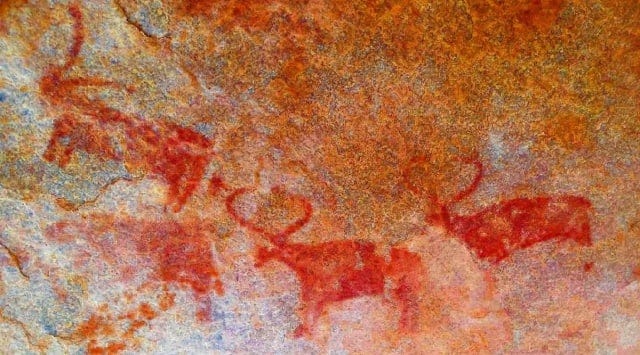
One can’t help but marvel at the recent discovery of mesolithic age rock art in Kasipeta, located in Yadadri Bhuvanagiri district. Members of Kotha Telangana Charitha Brundam stumbled upon these ancient echoes drawn in red ochre, situated inside a hood rock shelter on a small hillock. These markings, strikingly similar to those found at Edathunoor in Sangareddy district, offer a glimpse into the minds of our distant ancestors.
A Shelter Under the Tortoise Rock: Neolithic Axes in BNR Hills
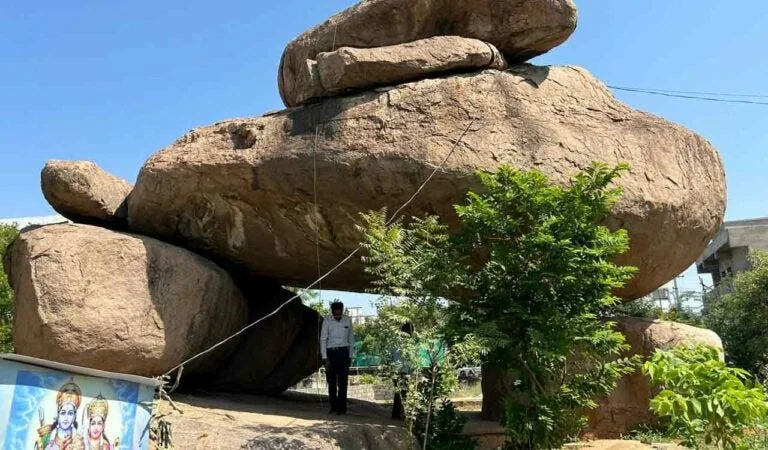
Adjacent to the modernity of Jubilee Hills lies the BNR Hills, where archaeologists have discovered prehistoric rock shelters and Neolithic stone axes. Locally known as ‘Tabelu Gundu’ or Tortoise Rock, this natural formation serves as a silent testimony to a past where early settlers were transitioning to a life dependent on agriculture and animal husbandry. The stone axes made out of basalt stone, and the rock shelter itself, mark a significant shift from nomadic life to temporary settlements, perhaps even seasonal habitation.
Seasons in Stone: The Habitation of Lanco Hills
The sprawling expanse of Peddagutta near Lanco Hills is another treasure trove of prehistoric remains. A seasonal habitation seems to have thrived here, with multiple rock shelters and caverns offering protection against the elements. Evidence of grinding and polishing stone tools suggests an advanced level of tool-making and an organized way of life for its time.
A Symphony in Stone: Musapet’s Neolithic Bull
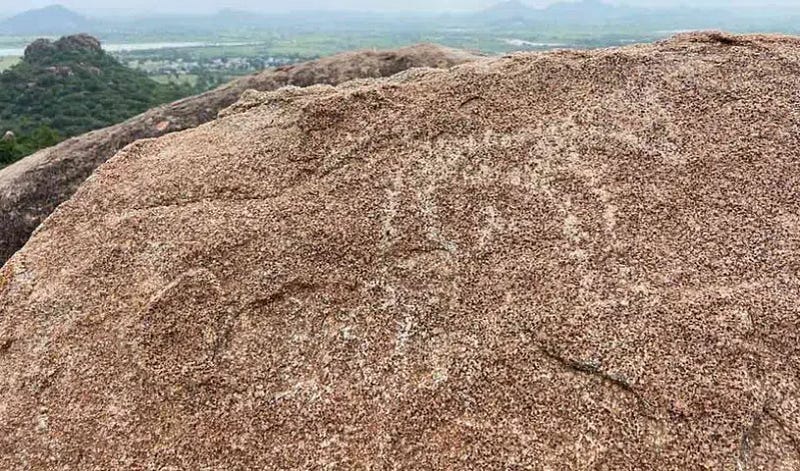
In the quaint Musapet mandal headquarters of Mahabubnagar district, another prehistoric art form has emerged, a rock bruising of a bull, dated back to the Neolithic period. The image signifies a time when domestication of animals and agriculture began to gain prominence, marking another step in the journey towards organized societies.
Coins Tell a Tale
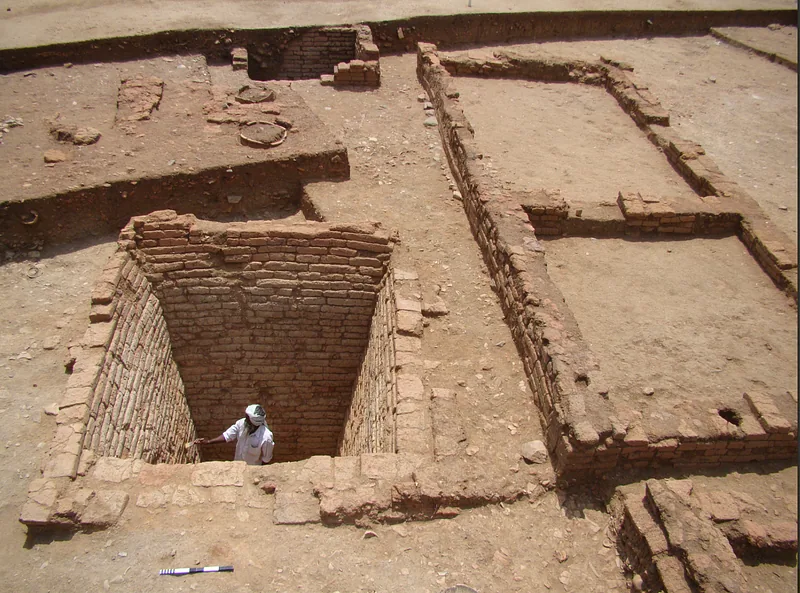
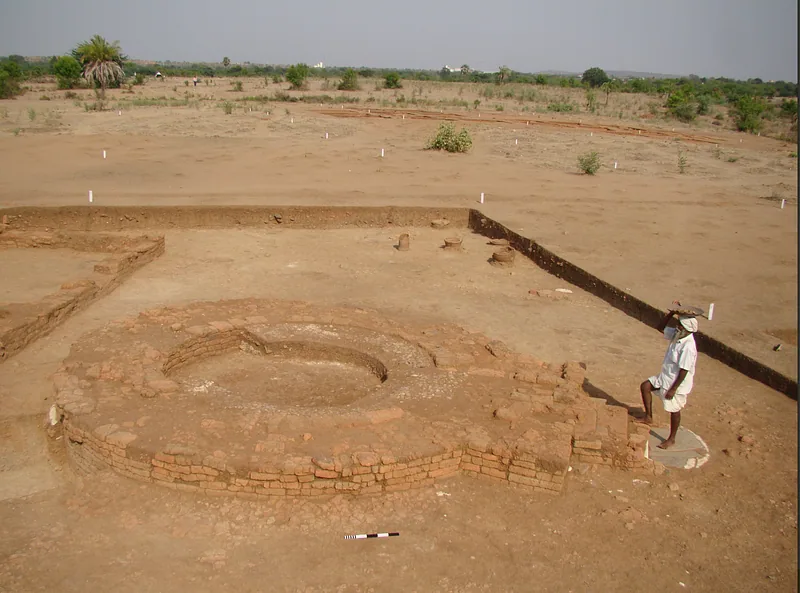
Kondapur, located in the Sangareddy district on the outskirts of Hyderabad, has caught the attention of historians and archaeologists for the bounty it revealed: a staggering 2,000 coins, including Roman and Satavahana examples. This finding serves as concrete evidence of the region’s long-standing engagement with global trade networks. The presence of Roman coins and artifacts not only signals trade but also hints at a level of diplomatic and cultural exchange that transcends mere mercantile interactions.
Kondapur’s connection with the Satavahana dynasty (known for its art, architecture, and maritime trade) establishes it as a hub of ancient Indian civilization. The Satavahanas themselves were patrons of various cultural pursuits, a fusion of indigenous traditions with Hellenistic influences. The site’s history under the Satavahana reign draws a parallel to modern Hyderabad’s cosmopolitan ethos, emphasizing a long tradition of embracing diversity.
Keesaragutta: Where Myths and Reality Converge
Nestled 45 kilometers away from the bustling city of Hyderabad, Keesaragutta is more than just a hillock in the Medchal-Malkajgiri district. It is a sacred site that is wrapped in the cloak of mythology, where the presiding deity, Ramalingeswara, is said to have been installed by none other than Lord Rama: or Parasu Rama according to local lore. This alignment with legendary figures casts a divine aura around Keesaragutta, one that has beckoned devotees and researchers alike.
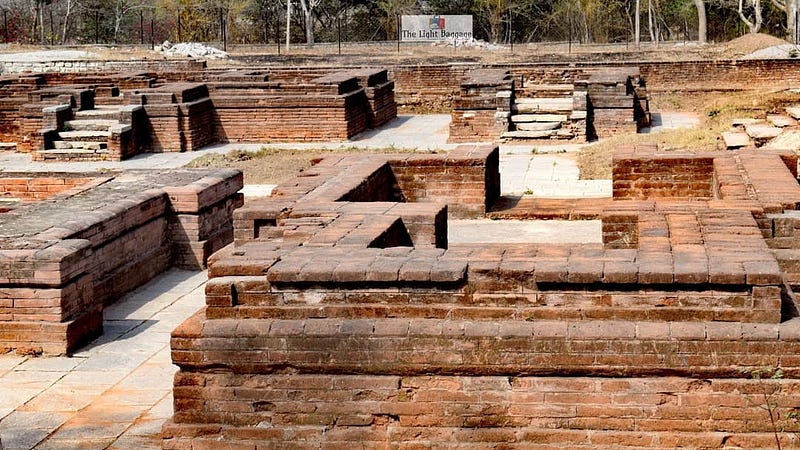
Excavations by the Department of Archaeology have unearthed structures featuring large-sized bricks comparable to those found at famed historical sites like Nagarjunakonda and Yeleswaram. Intriguingly, a substantial number of coins from the Vishnukundin era were also discovered. This collection of ancient currency serves as a time capsule, offering glimpses into the sociopolitical atmosphere during the Vishnukundin Period, and firmly anchoring the site’s antiquity to at least the 4th century A.D.
The plethora of artifacts discovered at Keesaragutta paints a vibrant picture of life in ancient times. Items ranging from Garbhapatra and Lajjagouri stone plaques, depicting the Mother Goddess, to terracotta and crystal lingas, speak volumes about the rich religious and cultural shades that were woven in this region. The presence of diverse artifacts, including ear spools, beads, and shell bangles, further accentuates the multifaceted lifestyle that once thrived here.
One of the most compelling findings at Keesaragutta is an early Telugu label inscription reading “Thulachuvanru.” The script’s palaeography dates it back to the 4th-5th century A.D. This antiquated form of local language not only establishes the site’s historical importance but also its contribution to the evolution of Telugu culture and language.
Conclusion
As we draw the curtains on this first part, let us take a moment to reflect. We’ve ventured far back in time, peering into ancient geological formations and the first footprints of humankind, only to find that the landscape we now call Hyderabad has been a focal point of activity for millennia. From its fertile soil nourished by volcanic activity to the ancient cultures that flourished here, we’ve only scratched the surface. And remember, we are still about 1200 years away from the formation of the city of Hyderabad as we know it.
Our narrative, rich with the textures of earth and stone, of man and myth, has many more layers yet to be uncovered. In my subsequent blog posts, we will journey through the shades of dynasties and empires, of invasions and innovations, that contribute to Hyderabad’s unique and complex identity. As we continue to unearth these layers, we find that the city is not just a geographical locale but a living, breathing entity, shaped by the manifold experiences it has gathered across time.
Stay tuned for the next chapter in this grand narrative. There’s much more to explore, many more dots to connect, and an endless array of stories waiting to be told. Thank you for embarking on this temporal adventure with me; until we meet again, let the ancient winds of Hyderabad whisper their untold tales in your ears.